
In-Depth: Stop 'Hidden Losses' to Boost Farmers' Profits
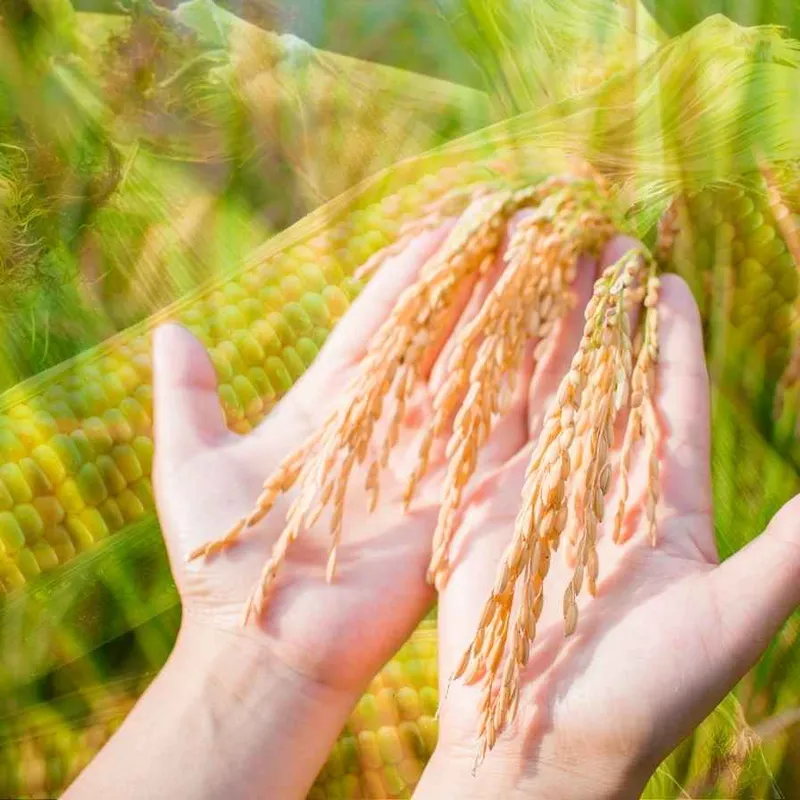
Deep Dive: How to Stop ‘Latent Loss’ and Boost Farmers’ Profits
When is the Best Time to Harvest Paddy, Maize, and Soybean?
Many farmers might have wondered, “Why does the harvested yield weigh less than expected, even though the ears and panicles look completely full?”
The answer likely lies in the “harvest timing.” A recent scientific study has uncovered that leaving crops like paddy, maize, and soybean in the field for too long does not always make them dry and good, but instead causes a phenomenon called “Latent Loss”—a hidden drain that is invisible to the naked eye but hits the money in the pocket directly.
This article summarizes the knowledge from the research paper titled “Optimized Harvest Management Strategy Based on Latent Loss and Antioxidant Enzyme Activity” so that farmers can practically apply it.
1. What is “Latent Loss”?
We often understand that the longer we leave crops in the field, the more the moisture decreases and the better the selling price becomes. But the truth has another side.
Latent Loss is a phenomenon where the dry matter weight of the grain accumulates to its highest at a certain point, but after that, the weight will “decrease” if we harvest too late.
- Why does it decrease? Because the crops still undergo metabolism inside the seed, or physical shattering occurs, causing the nutrient substance to disappear without us realizing it.
- How much disappears? The research found that if harvested too late:
- Maize: The weight can disappear by up to 12.10%
- Soybean: The weight can disappear by up to 5.57%
- Paddy: The weight can disappear by up to 3.53%
Food for Thought: Imagine that if we have 1 ton of maize, if harvested too late, the weight might disappear for free by up to 120 kilograms. This is the profit that evaporates into thin air.
Summary of Total Principle: Harvesting “too late” does not just help the seeds dry down, but it causes the “substance weight” to actually disappear. Therefore, harvesting should be done immediately when the moisture reaches the standard criteria; do not leave it longer than that.
2. What Can the Crop’s Body Tell Us?
(The matter of enzymes)
The researchers did not look only at the weight, but also dived deep into the internal health of the crops by looking at the values of Antioxidant Enzymes such as SOD, POD, and CAT.
- What are these enzymes? They are comparable to the “immune system” of the crops; they work heavily when the crops experience stress or are growing to full maturity.
- Timing signals: The research found that these enzyme values will “increase until they reach their peak” when the seeds are fully mature, and will “gradually decrease” when the crops begin to enter the degradation stage.
- Point of observation: The period when the enzymes begin to decrease is usually the same period when the dry weight of the seeds begins to stay constant or decrease, which is a warning signal that “it is time to harvest.”
3. If Harvesting is Done Too Late, How Much Damage Will Occur?
📉 Damage If Harvesting Paddy Late
- The 2019 Experiment: In 3 rice varieties, it was found that late harvesting caused the weight to disappear by approximately 3.47% [5]
- The 2020 Experiment: In 18 rice varieties, the maximum loss was found at 3.53% [5]
- Large-scale Field Data: If allowed to pass the harvest time for too long (the period of 55-75 days after full heading), the weight loss can be as high as 7.16%
Maize (Corn)
There is a very high risk of losing weight if left for too long:
- Maximum damage: The internal substance weight can disappear by 12.10% - 17.29% (depending on the variety)
Soybean (Soybean)
Delayed harvest until moisture drops below 13% significantly increases the risk of pod shattering in the field, mechanical damage during combine harvesting, and a major reduction in overall dry weight due to prolonged respiration. The research indicated that the optimal harvesting moisture content is 14% – 16% to keep tissue degradation (MDA level) at its lowest.
4. Scientific Conclusion on the Optimal Harvest Windows for 3 Crops
To prevent “Latent Loss” or hidden substance loss, the research paper finalized the precise moisture and timing criteria for each crop variety as follows:
- Maize (Corn): Harvest at 26% – 28% moisture content. This is the period when SOD and POD enzyme activities reach their highest peak, signifying absolute physiological maturity. It is highly recommended to harvest at this stage and immediately transfer the yields to a mechanical hot-air dryer rather than letting them dry naturally on the stalk.
- Soybean: Harvest at 14% – 16% moisture content. This window guarantees that the biological aging index (MDA) is lowest and successfully avoids crop cracking or shattering caused by modern mechanical harvesters.
- Paddy (Rice): Harvest at 21% – 23% moisture content, which is approximately 25 to 35 days after full heading (This specific period depends on regional rice varieties; farmers should consult local rice research centers). Alternatively, it corresponds to the stage of 55–75 days after heading (Note: This number can vary depending on Thai rice cultivars; consulting local agricultural research stations in the area is highly recommended).
💡 Core Takeaway: Shifting to a “Precision Harvest” management workflow enables farmers to fully secure and protect their real potential yield, successfully preventing their hard-earned money and profits from dissolving or evaporating away in the open field.
Primary Reference Sources:
- Wang, Y., et al. (2025). Optimized Harvest Management Strategy Based on Latent Loss and Antioxidant Enzyme Activity. Foods, 14(7), 1197. MDPI.
- Paddy reference data based on baseline research from the same research team (Cited in Ref 14-16 of the main paper).
Data Cited From: Wang, Y., et al. (2025). Optimized Harvest Management Strategy Based on Latent Loss and Antioxidant Enzyme Activity. Foods, 14(7), 1197.
Looking for an Accurate Moisture Meter?
Control Your Crop Quality with Precision Moisture Standards
Ensure absolute certainty across your quality control workflows with the Grainsure moisture meter—engineered and optimized specifically for agricultural grain applications.