
Types of Grain Moisture Meters
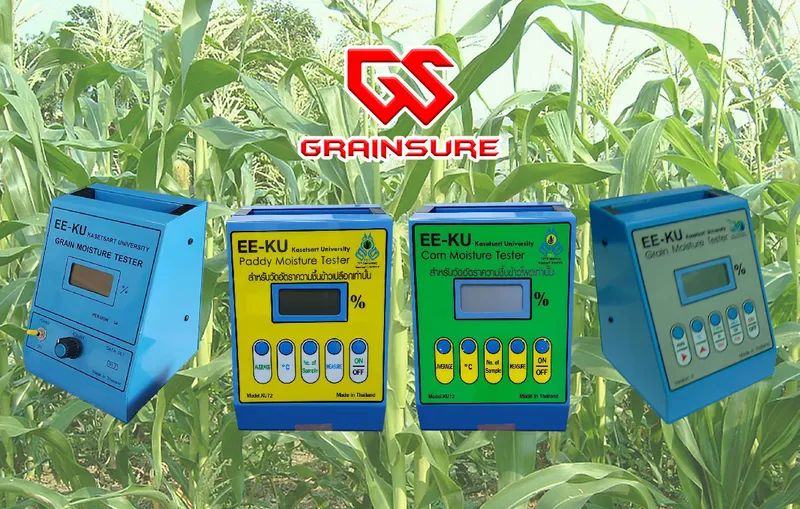
Grain Moisture Meters
A grain moisture meter is a device used to measure the moisture content in grains. These can include agricultural seeds such as corn, paddy, wheat, beans, sorghum, and finger millet, or granular materials like fertilizer pellets and animal feed pellets. This equipment helps farmers, traders, mill owners, and factory operators determine whether grains are sufficiently dry for harvesting, storage, or sale, thereby preventing spoilage, mold development, and weight loss.
🔧 How It Works:
- Moisture meters utilize electrical properties, such as electrical resistance, capacitance, or infrared heat, to evaluate the water content within a grain sample.
- Some models require you to insert a probe into the grain mass or pour a sample into a testing chamber.
- The results are typically displayed on a digital screen as a percentage of moisture content (e.g., 13.5%).
✅ Why It Is Important:
- Excessive moisture can cause grains or materials to spoil or develop mold.
- Insufficient moisture can lead to weight loss and reduced profit margins.
- It ensures compliance with market standards for safe grain storage and export.
Grain moisture meters are absolutely essential for post-harvest quality control and maximizing overall profitability.
Types of Grain Moisture Meters
There are several types of grain moisture meters available, each with specific features tailored to different operating environments and accuracy requirements:
1. Portable/Handheld Moisture Meters
- Details: These are compact, battery-operated devices used directly in cultivation fields or storage facilities.
- How It Works: Grains are placed into a built-in testing chamber, or an attached probe is used.
- Best Suited For: Farmers, small-scale traders.
- ✅ Pros: Highly portable, provides rapid results, non-destructive to test samples.
- ❌ Cons: Relatively lower accuracy.
2. Pin-Type Moisture Meters
- Details: These utilize sharp metal pins or probes that are inserted directly into the grain mass or agricultural sacks.
- How It Works: They measure the electrical resistance between the pins, which varies according to the moisture levels.
- Best Suited For: Sacked crops, deep grain mass sampling.
- ✅ Pros: Ideal for measuring pre-stored or bagged grains.
- ❌ Cons: May cause minor damage to the samples, relatively lower accuracy.
3. Capacitance-Type Moisture Meters
- Details: These feature a sampling chamber designed to measure changes in electrical capacitance.
- How It Works: Grains are poured into the chamber, and the device reads the moisture content through dielectric properties.
- Best Suited For: Providing accurate and highly repeatable results across a wide variety of grains.
- Examples:
- KU60 Multi-grain moisture meter for general crops
- EE-KU Coffee, Corn & Grain Moisture Meter
- ✅ Pros: High accuracy, suitable for diverse grain types.
- ✅ Pros: Highly portable, provides rapid results, non-destructive to test samples.
4. Infrared Moisture Meters
- Details: These employ heat and infrared technology to determine moisture content by completely drying the sample.
- How It Works: They measure the weight loss resulting from the evaporation of moisture.
- Best Suited For: Laboratory applications or industrial factory environments.
- ✅ Pros: Extremely high level of accuracy.
- ❌ Cons: Slower operation and higher cost; not portable for on-site field use.
5. Online/Continuous Moisture Meters
- Details: Installed directly onto grain processing conveyor belts or inside silos for real-time monitoring.
- How It Works: Continuously measures the moisture content of the grains as they flow through the system.
- Best Suited For: Grain processing plants, rice mills.
- ✅ Pros: Eliminates the need for manual data entry, providing non-stop automated monitoring.
6. Universal/Grain-Type Selectable Meters
- Details: Digital meters pre-programmed with settings for multiple grain varieties (e.g., corn, mung beans, soybeans, sorghum, paddy, etc.).
- How It Works: The operator selects the specific grain type from a menu to apply a precise calibration.
- Example: KU60 Grain Moisture Meter
- Best Suited For: Multi-crop farmers and commodities traders.
- ✅ Pros: Highly versatile, cost-effective, eliminates the need to purchase multiple dedicated devices.
To measure moisture content efficiently, you need highly accurate instruments. Grainsure Co., Ltd. offers a comprehensive range of moisture meters backed by full after-sales service support:
- KU60 Grain Moisture Meter Measures up to 7 types of grains within a single device. Custom programming is available to measure specific grains according to the buyer’s requirements (made-to-order).
- EE-KU Corn Moisture Meter An economical, budget-friendly model capable of measuring both corn and coffee beans.
Explore these instruments on the official website of Grainsure Co., Ltd.